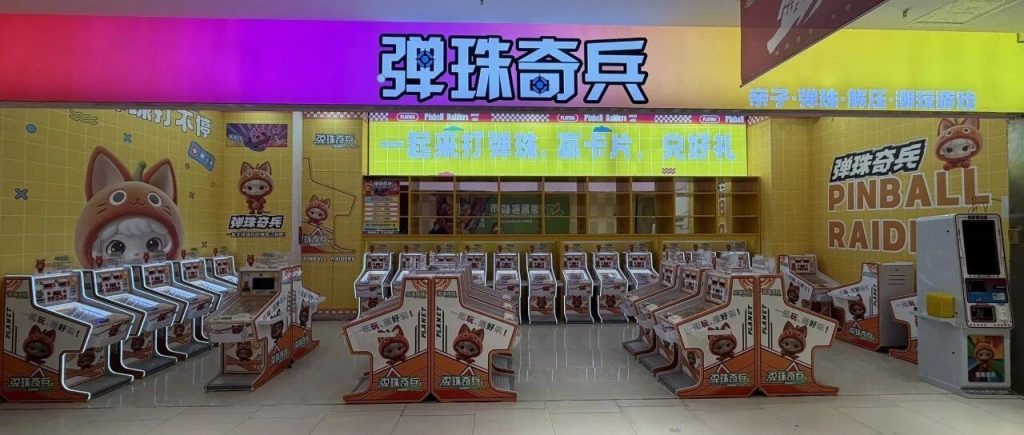
A complete plan for the “long-term, stable” operation of a pachinko store.
I. Core pricing and profit model
1. Pinball pricing system (to raise the average transaction and players’ initial spend) · Base unit: RMB 1 = 7 pinballs (a per-ball price of about RMB 0.143, close to your current 0.135, for easy calculation and transition). · Sales packages: · RMB 10 package: 70 balls + 10 bonus = 80 balls total (effective unit price RMB 0.125/ball). This is the main recommended package — best value, encouraging larger top-ups. · RMB 30 package: 210 balls + 40 bonus = 250 balls total (effective unit price RMB 0.12/ball). For players who want to play longer or parents with children. · RMB 50 membership package: 350 balls + 100 bonus + one extra “lucky card” = 450 balls + 1 card (effective unit price RMB 0.111/ball, plus one direct prize-draw chance). Locks in loyal customers.
2. Prize system and cost control (tiered rewards to control core cost) · Core concept: cards are the redemption medium, but prize value must be tiered. Introduce a “virtual card-collection album” to slow actual prize consumption. · Prize structure: · Tier T1 (1–5 card redemption zone): cost RMB 0.5–3. Examples: small erasers, pencils, mini toys, whistles, sticker packs, cheap snacks. Mainly for children’s instant gratification; highest win frequency. · Tier T2 (10–30 card zone): cost RMB 5–15. Examples: genuine blind boxes (hot IP), small Lego sets, cartoon piggy banks, mid-range plush toys, branded stationery sets. This is the main zone attracting teenagers and families. · Tier T3 (50–100 card zone / “jackpot”): cost RMB 25–50. Examples: large premium plush toys, remote-control cars, science experiment kits, well-known brand toys. Creates dreams and buzz, encouraging players to save cards. · “Special prize” (virtual album reward): design a set of virtual “themed albums” (e.g. dinosaur series, hero series). Players use duplicate physical cards to “light up” cells in the virtual album (each physical card maps to a random cell). Completing a full page (e.g. 12 cells) redeems a “limited-edition physical grand prize” (cost kept to RMB 80–150, but hard to obtain). This greatly consumes players’ surplus cards and “binds” them to your system, while actual prize spending is far lower than redeeming every card for a physical item.
II. Machine probability and card-payout mechanism (stable profit, anti-cheating)
1. Base card-payout probability model: · Set the machine’s “guaranteed card” value to float dynamically between 18–25 balls (average about 21). · Introduce a “small-prize filler card” mechanism: during normal play, there is a chance (e.g. every 10 balls played) to drop a “fragment card.” Collecting 3–5 fragment cards combines into one standard prize card. This increases feedback without materially lowering the card ratio. · For multiplier play: keep the 8–10x zone as the main zone, but add a “hidden jackpot pool.” When a player hits 10x a certain number of times in a row (e.g. 5), trigger a “lucky time” — for the next 3 games the card ratio temporarily drops (e.g. 12–15 balls) for a burst of surprise.
2. Anti-cheating and dynamic balance: · Hardware protection: regularly change machine locks and use uncopyable dedicated keys. Add one-time tamper-evident seals at key internal circuits. · Data monitoring: calculate the “overall card ratio” daily (total balls consumed / total prize cards). Set a safety red line (e.g. ratio below 16) and a warning line (below 18); when triggered, inspect the relevant machine immediately. · Dynamic adjustment: each week, fine-tune card probabilities per machine based on back-end data. For machines with abnormally low ratios, temporarily raise the balls needed per card; for unpopular machines, briefly lower it to attract players. The principle is “dynamic balance, overall stability.”
III. Operations and event strategy (boost stickiness and spending)
1. Daily operations: · Set a “Members’ Day”: one day a week when members get an extra 10% balls on top-up. · “Check-in challenge”: players who check in 3 consecutive days get a “lucky card” on day
3. · Parents’ rest area: provide free Wi-Fi, charging outlets and seats so accompanying parents are comfortable and families stay longer.
2. Themed events: · Launch a new “themed album” each month with different virtual collection rewards; rotate regularly to keep it fresh. · Hold a “Pinball Masters” tournament: within a fixed number of balls, whoever scores highest or wins the most cards wins; winners receive large numbers of cards or directly redeem Tier T3 prizes.
IV. Financial safety-margin calculation (based on your data) · Worst case (persistent cheating, card ratio = 10): revenue per card: 10 balls × 0.143 = RMB 1.43; cost per card: prize cost (Tier T1 average RMB 1) + card cost (estimated 0.05) = RMB 1.05; gross profit: 1.43 − 1.05 = RMB 0.38/card — still profitable, but very thin. · Target operation (overall card ratio = 21): revenue per card: 21 × 0.143 = RMB 3.00; cost per card: 1.05 (same); gross profit: 3.00 − 1.05 = RMB 1.95/card — healthy and substantial. · Break-even calculation: assuming prize + card cost of RMB 1.05 and a per-ball price of RMB 0.143, break-even card ratio = 1.05 / 0.143 ≈ 7.34 balls. This means that as long as the system’s average card ratio is above 7.34, you won’t lose money — giving plenty of safety margin for probability design.